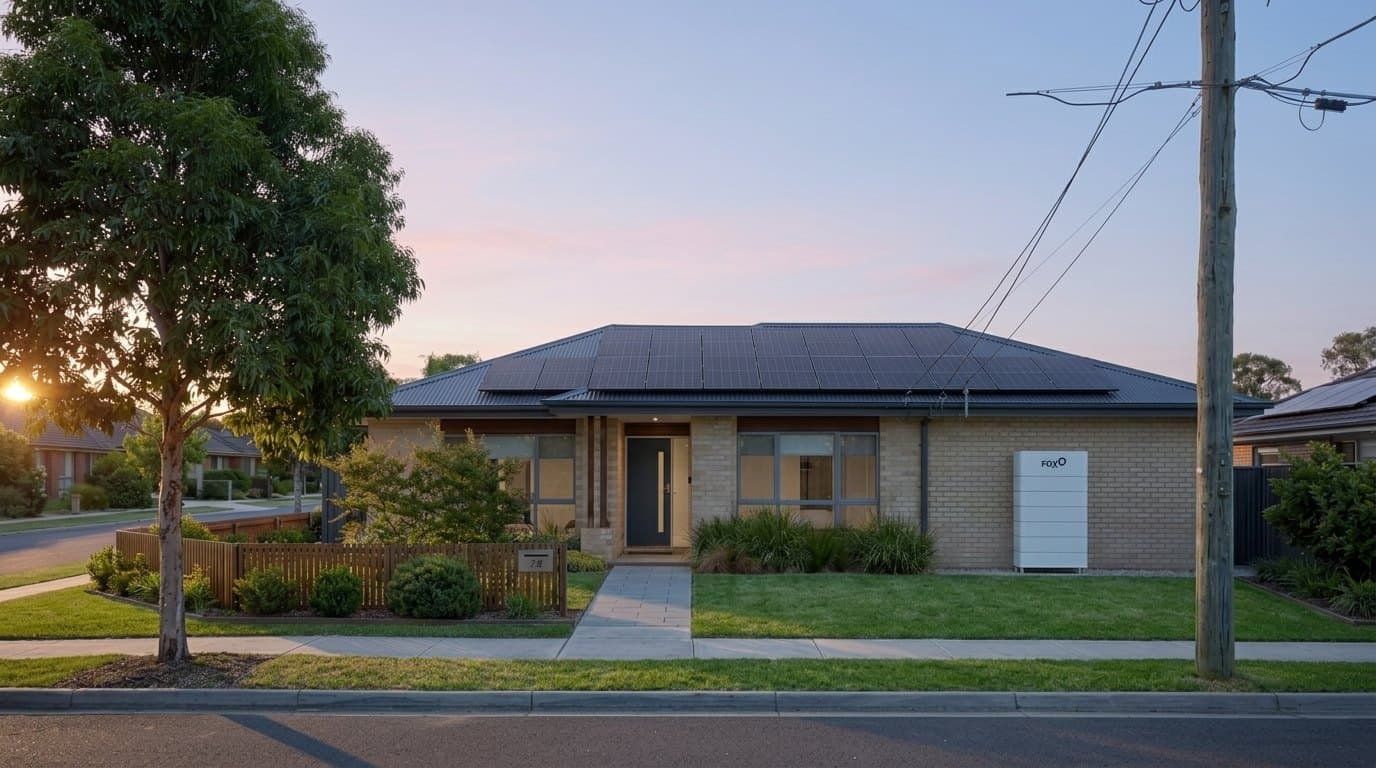
Why solar feed-in tariffs keep falling (and what to do)
Why solar feed-in tariffs keep dropping, what regulators say exports are worth in 2026-27, how the Solar Sharer Offer works and what to do about it.
Solar9 min read
By the Sunnn design team
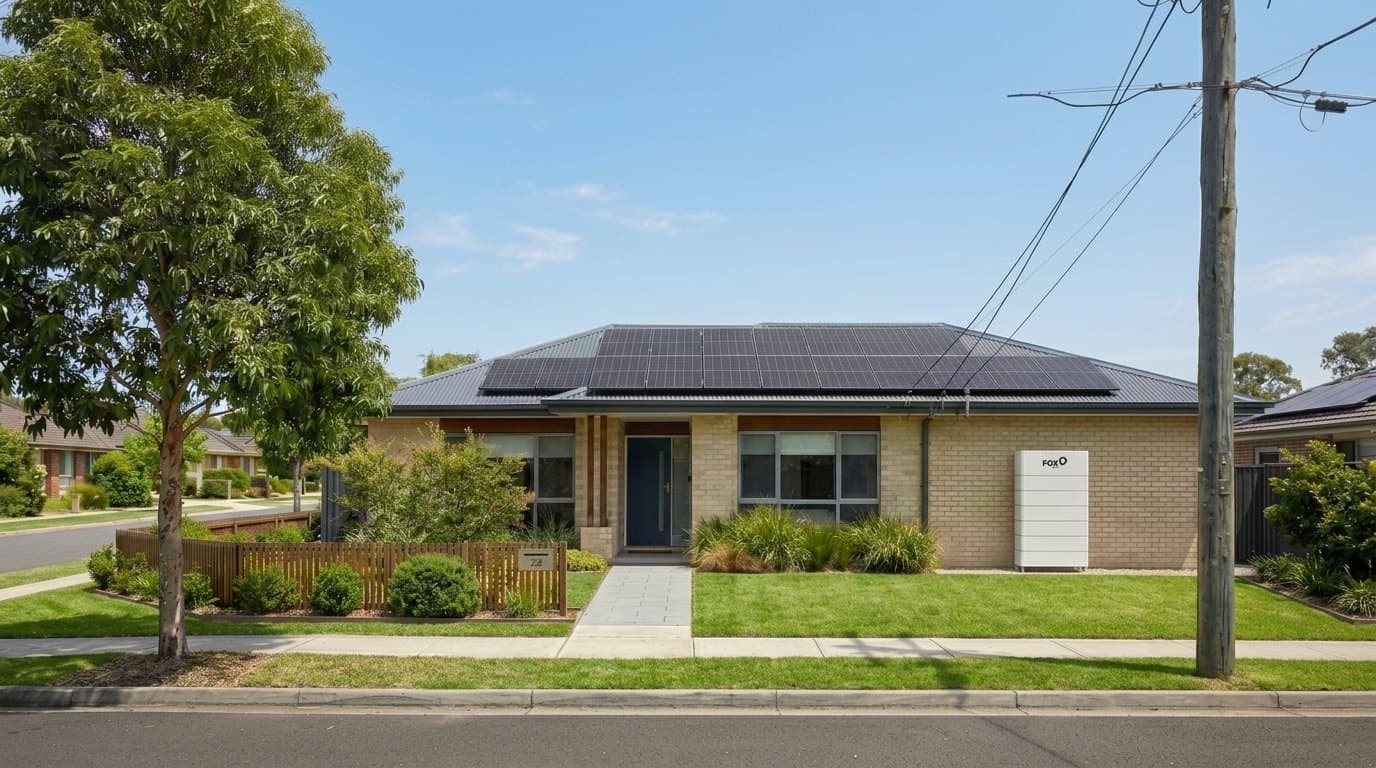
The short version
- A feed-in tariff is what your retailer pays for the solar power you send back to the grid. It largely reflects what that power is worth on the wholesale market when you export it.
- So much rooftop solar now exports at the same time that midday wholesale prices are often low or below zero, so feed-in tariffs keep falling.
- NSW's 2026-27 benchmark is 3.4 to 6.5c per kWh, regional Queensland's regulated rate fell to about 6c, and Victoria no longer sets a minimum at all.
- The better play now is to use more of your own solar during the day, store it in a battery for the evening, or choose a plan that pays you when power is actually worth something.
What a feed-in tariff actually is
When your panels make more power than your home is using, the spare power flows out to the grid and your neighbours use it. Your electricity retailer pays you a small amount for every kilowatt hour (kWh) you send out. That payment is the feed-in tariff, often shortened to FiT. For most homes the rate is set by the retailer, and it keeps heading down.
Why feed-in tariffs keep falling
The short answer: everyone's solar exports at the same time.
Electricity in most of Australia is traded on a wholesale market where the price changes every five minutes. On a sunny day, millions of rooftop systems all hit their peak around the middle of the day. Add in large solar farms and there is often far more power than people need at that hour, so the wholesale price drops, and quite often goes below zero.
The shape of a spring day on the wholesale market
The Australian Energy Market Operator (AEMO) reported that in January to March 2026, prices were negative in 67% of daytime five-minute intervals in South Australia, 53% in Victoria, 26% in Queensland and 16% in New South Wales, counting 9am to 5pm. AEMO puts this down to low daytime demand from the grid, driven by strong rooftop solar output, plus high wind and solar farm output.
Your retailer generally does not pay you more for your exports than they are worth to it. If it could buy the same power from the market for close to nothing at noon, your midday exports are worth close to nothing too. NSW's pricing regulator, IPART, says it plainly: its benchmark is based on its estimate of the wholesale price of electricity at the times solar is exporting.
Why you pay far more than you get paid
IPART explains that when your exported power reaches another home, the retailer still has to pay network charges to use the poles and wires, plus environmental scheme costs, billing and call centres, and GST, and it also makes a margin. The power you export only replaces the wholesale part of that bill, which is the cheap part at midday.
What feed-in tariffs look like in 2026-27
Here is what the regulators have published for the year from 1 July 2026. We have only included what we could confirm on each regulator's own site.
| Where | What is set | 2026-27 figure |
|---|---|---|
| New South Wales | IPART benchmark (a guide only) | 3.4 to 6.5c per kWh all-day |
| Regional Queensland | QCA regulated flat rate | 6.006c per kWh |
| Victoria | No minimum any more | Retailers set their own, not below 0c |
A few details matter:
- NSW: the 2026-27 benchmark is down from 4.8 to 7.3c per kWh in 2025-26. Retailers do not have to offer a rate inside the range. It is a yardstick for judging your offer.
- Regional Queensland: the Queensland Competition Authority set 6.006c per kWh from 1 July 2026, 31% lower than the 8.660c rate it replaced. It applies to customers of Ergon Retail, and of Origin Energy on the Essential Energy network, in regional Queensland. It does not cover South East Queensland.
- Victoria: after a change to the law in May 2025, the Essential Services Commission stopped setting a minimum feed-in tariff. From 1 July 2025 retailers set their own, and the only floor is that the rate cannot be below zero. So the best solar feed-in tariff in Victoria is whichever retailer offer suits your whole bill.
Export charges: paying to send power out
Some networks now have two-way tariffs. In NSW, IPART says network tariffs for solar exports were introduced in 2024. They can include a charge for exports during certain daytime hours once you go over a free amount, and a credit for exports during the evening peak. The network businesses (Ausgrid, Endeavour Energy and Essential Energy in NSW) set these, subject to approval by the Australian Energy Regulator.
The network charges your retailer, so how much reaches your bill depends on your plan. The message matches the wholesale price: midday exports are worth little, evening exports are worth more.
The Solar Sharer Offer: free power at midday
The federal government's Solar Sharer Offer started on 1 July 2026. It is an optional plan that gives eligible households three hours of free electricity in the middle of every day, up to 24 kWh a day.
- Where: New South Wales, South East Queensland and South Australia. It is not available in Victoria, although the government says it is looking at other areas.
- When: 11am to 2pm in NSW and South East Queensland, and 12pm to 3pm in South Australia.
- Who: households with a smart meter, renters and owners, not supplied through an embedded network. Retailers with more than 1,000 customers in those areas must offer it. You do not need solar.
- The catch: you still pay the daily supply charge and for everything you use outside the window, at rates the regulator sets. Hot water and pool pumps on a controlled load may not be able to shift.
If you already have solar, think it through before switching. Your own panels are already covering the house at midday, so a free midday window helps you most if you have something big to fill it: a battery to charge, an EV, or heating and cooling you can run then. Ask your retailer what feed-in tariff, if any, comes with the plan.
What to do about it
A falling feed-in tariff does not make solar a bad idea. IPART's own fact sheet says the largest benefit of solar is using the power you generate instead of buying it. It just changes how you get the most out of it.
1. Use more of your own solar during the day
Every kWh you use yourself saves the per-kWh price you would have paid for it, not the few cents you would get for exporting it. Some easy moves:
- Run the dishwasher, washing machine and dryer on a timer in the middle of the day.
- Put your hot water on a daytime timer or a diverter so it heats from your solar, if your system allows it. Ask your electrician.
- Pre-cool or pre-heat the house in the early afternoon.
- Charge an EV at home in the day where you can.
2. Add a battery
A battery stores your spare midday solar and runs the house with it in the evening, when you would otherwise pay full price. That is the gap a low feed-in tariff opens up. The federal battery rebate brings the price down, covered in The 2026 home battery rebate, explained, and sizing is in How big a home battery do you need?
3. Consider a wholesale plan
On a wholesale plan, your import and export prices follow the market in real time. Midday exports can earn nothing or even cost you, but evening exports during price spikes can earn far more than any flat feed-in tariff. It suits homes with a battery that can be set to hold power back at midday and sell into the evening. We explain the trade-offs in Wholesale electricity plans, explained, and how our systems are set up for it on the wholesale page.
When this is not worth chasing
Be honest with yourself about a few things.
- If you export very little, the feed-in tariff barely matters. Switching plans for an extra cent is not worth much.
- A battery has to pay for itself. If your evening usage is small, a battery may take a long time to earn back its cost. Our is a home battery worth it? article walks through when it is and is not.
- Wholesale plans carry risk. Without a battery that responds to prices, a wholesale plan can cost you more than a standard plan when evening prices spike.
- Rates change every year. The QCA itself warns customers not to expect the feed-in tariff to stay the same when deciding to install or upgrade. Base any decision on using your own power, not on export income.
Next step
Want to see how much of your solar you could keep instead of exporting? Try the savings calculator, which takes about a minute. Or check your eligibility and we will design and quote a system for your home, with any battery sized to your evenings and the rebates shown line by line. Any figures we give you are modelled estimates, not promises.
Common questions
Why are solar feed-in tariffs so low?
Because feed-in tariffs follow the wholesale value of the power at the time you export it. With so much rooftop and large-scale solar generating at midday, wholesale prices at that time are often very low or below zero, so retailers pay little for midday exports.
What is a fair solar feed-in tariff in NSW for 2026-27?
IPART's all-day benchmark for 1 July 2026 to 30 June 2027 is 3.4 to 6.5 cents per kWh. Retailers do not have to offer a rate in that range, and a higher rate can come with higher prices for the power you buy, so compare the whole plan.
Is there still a minimum feed-in tariff in Victoria?
No. Since 1 July 2025 the Essential Services Commission no longer sets a minimum feed-in tariff. Victorian retailers set their own rates, which cannot be below zero.
Is the Solar Sharer Offer worth it if I have solar panels?
It depends. The offer gives three hours of free power at midday in NSW, South East Queensland and South Australia, but your panels already cover much of your midday use. It is most useful if you can fill that window with a battery, an EV or other big loads. Check the rates outside the window and what feed-in tariff comes with it before switching.
Sources
- IPART: Solar feed-in tariffs (2026-27 benchmark and network export tariffs)
- IPART: Fact sheet, solar feed-in tariff benchmark for 2026-27
- Queensland Competition Authority: Solar feed-in tariff in regional Queensland 2026-27 fact sheet
- Essential Services Commission (Victoria): Minimum feed-in tariff
- energy.gov.au: Solar Sharer Offer
- DCCEEW: Default Market Offer (Solar Sharer Offer start date)
- AEMO: Quarterly Energy Dynamics Q1 2026
General information only, not financial advice. Rebates and market rules change; check the sources above for the current position. Any savings figures are modelled estimates, not guarantees. See our disclosures.